
Water stewardship
Understand local supply, seasonal constraints, cooling demand, and the feasibility of reuse. Evaluate water choices alongside energy use and the needs of surrounding communities.
Our long-term vision
We envision data centers that support digital progress while respecting the resources and communities around them. That ambition applies to the facilities we retrofit today and the infrastructure we help develop for tomorrow—above ground and underground.
OUR AMBITION
Help meet the demands of AI and digital services with infrastructure planned for its full life.
Our ambition is to strengthen American ingenuity and domestic infrastructure capability: supporting local communities, contributing to national resilience, and helping American expertise compete at home and around the world.
We seek lasting value for operators and communities through dependable digital services, thoughtful resource use, and opportunities for skilled local work. Each project must evaluate those opportunities against its site, economics, and operating needs.
ETHICAL DEVELOPMENT IN PRACTICE
For us, ethical development is a commitment to accountable decisions. It means evaluating operating performance, environmental impacts, and community interests together, with measures and responsibilities agreed for each engagement.
Understand local supply, seasonal constraints, cooling demand, and the feasibility of reuse. Evaluate water choices alongside energy use and the needs of surrounding communities.
Compare power availability, cooling approaches, operating costs, and resilience requirements. Establish a project baseline and measurable objectives before selecting a path.
Consider land use, groundwater, drainage, habitat, construction impacts, and equipment life. Bring environmental specialists into the scope and evaluate reuse before replacement where appropriate.
Bring community concerns, local utility capacity, noise, workforce opportunities, and long-term site use into planning. Make assumptions, responsibilities, and trade-offs visible.
TURN PRINCIPLES INTO CHOICES
If a cooling option reduces energy demand but increases water consumption, how does it fit this site?
The answer requires a defined workload, local water and power information, comparable operating assumptions, and qualified technical input. Reuse, phasing, another cooling approach, or alternate hosting may deserve investigation.
These behaviors guide our scoped decision reviews. Environmental investigations, formal approvals, and community engagement have their own participants and requirements.
See how the Decision Review worksTWO PATHS. ONE PURPOSE.
Retrofit, reuse, and new development deserve the same whole-system perspective.
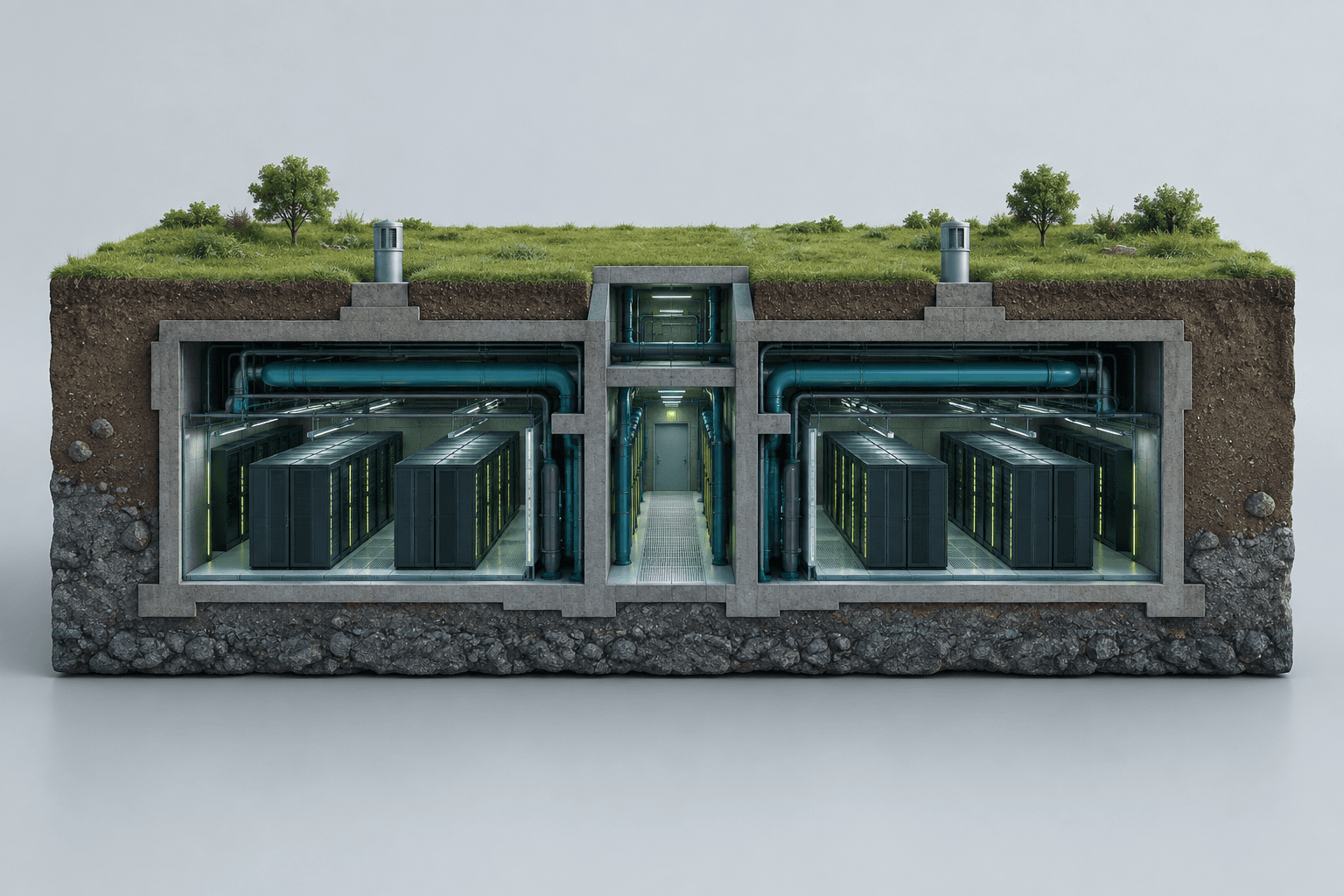
For existing facilities, evaluate cooling upgrades, energy and water use, equipment life, and continuity through change. For new above-ground and underground projects, bring site conditions, utilities, community interests, and long-term operations into feasibility and delivery planning.
HOW THE VISION ADVANCES
Our modular underground research explores one route toward that future. It considers power, cooling, serviceability, and site conditions together, with technical options evaluated through specialist analysis.
Each scoped engagement connects an operating need with a decision and its supporting evidence. Research explores how that discipline can inform better project definitions, coordinated scopes, and the next stage of the modular concept.
Scale follows the use case and the evidence. Each facility requires its own feasibility, engineering, and delivery plan.
Explore the research programSTART A CONVERSATION
Share your infrastructure priorities or interest in collaborating.